Om Symbol Meaning Explorer
ॐ
Unicode: U+0950
What It Represents
The Om symbol (ॐ) is the most sacred emblem in Hinduism, representing the sound of the universe and the ultimate reality (Brahman).
Symbol Components & Meanings
The Three Curves
- A - Waking state (physical existence)
- U - Dream state (mental activity)
- M - Deep sleep state (subconscious)
The Dot & Semicircle
- Dot - Turiya (transcendent state beyond the three states)
- Semicircle - The whole of existence encompassing all states
Origins & Usage
Historical Origins: Found in the Vedas and elaborated in the Mandukya Upanishad.
Usage: Chanted in mantras, used in yoga and meditation, found in temples and sacred art.
Sound: Pronounced as "A-U-M" with a silent pause after the final M.
Did You Know? The Om symbol is also known as the Pranava or the Great Syllable. In Sanskrit, it is called Shabda Brahma, meaning "the sound that creates the world."
Key Takeaways
- The Om symbol is the most widely recognized sacred emblem of Hinduism.
- It originates from the Vedas and represents the cosmic vibration of Brahman.
- Om appears in chanting, yoga, meditation, and temple art.
- Other Hindu symbols like the Swastika and Shri Yantra serve different devotional purposes.
- Respectful use of Om involves understanding its meaning and cultural context.
When you see the simple curvy figure “𐂃”, you’re looking at Hinduism’s most iconic mark. This article unpacks what the Om symbol really is, why it matters, and how it fits among other sacred signs.
What is the Om Symbol?
Om is a sacred syllable and visual emblem that encapsulates the essence of the universe in Hindu thought. Written as ॐ in Devanagari, the sound is traditionally rendered “A‑U‑M”. Its three phonetic parts-‘A’, ‘U’, and ‘M’-symbolize creation, preservation, and dissolution, while the silence after the chant hints at the transcendent beyond.
Historical Roots: From the Vedas to the Upanishads
The earliest mention of Om appears in the Vedas, the ancient Hindu scriptures compiled between 1500‑500BCE. The Mandukya Upanishad, a short text dedicated entirely to Om, explains that the syllable is the “sound of the supreme reality”.
These texts were composed in Sanskrit, the liturgical language that preserves the precise pronunciation required for the mantra’s vibrational effect.
Symbolic Meaning: Cosmic Sound and Spiritual Unity
In Hindu philosophy, sound is considered the first material manifestation. Om, therefore, stands for shabda‑brahma-the word that creates the world. The three curves of the graphic Om stand for:
- A: the waking state (physical existence)
- U: the dream state (mental activity)
- M: deep sleep (subconscious)
The dot (or the invisible fourth curve) represents the ultimate reality (Turiya) that underlies all states. When a practitioner chants Om, the vibration is said to align the individual self (ātman) with the universal self (Brahman).
How Om Is Used in Practice
Om appears in a variety of religious and everyday contexts:
- Mantra chanting: Priests begin prayers with “Om” to invoke divine presence.
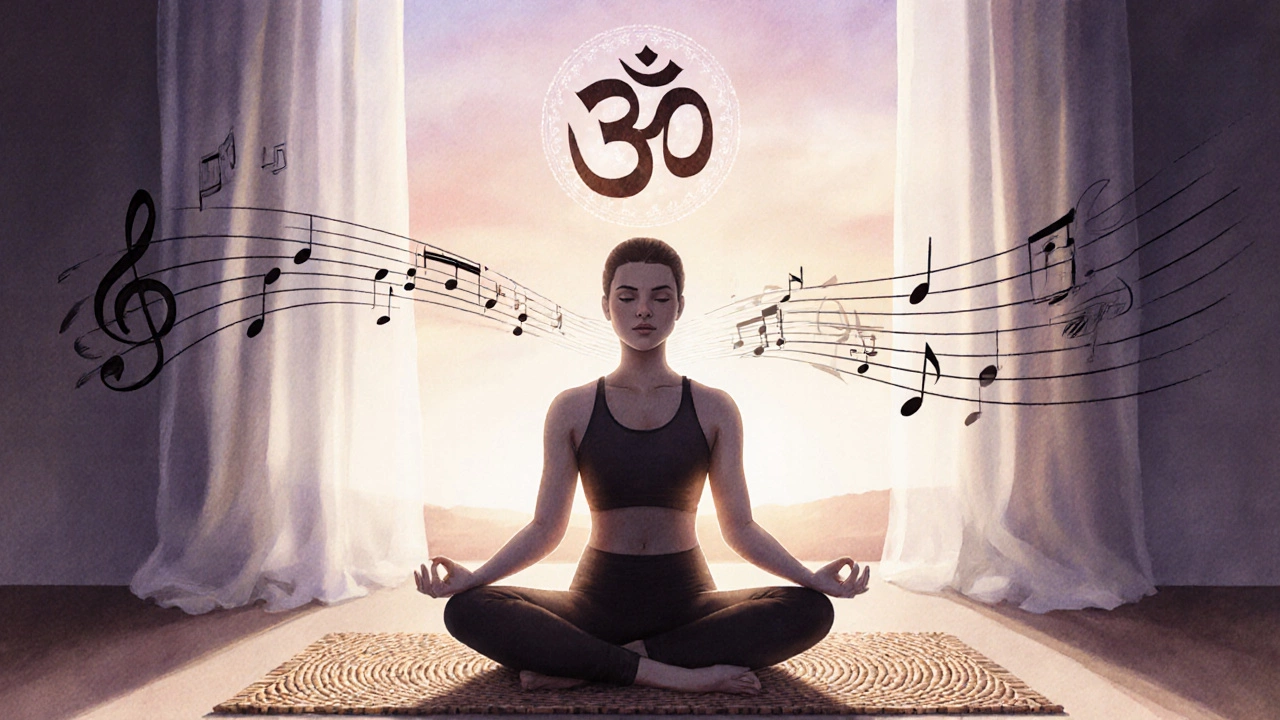
- Yoga and meditation: Yoga sessions often start and end with an Om chant to center the mind.
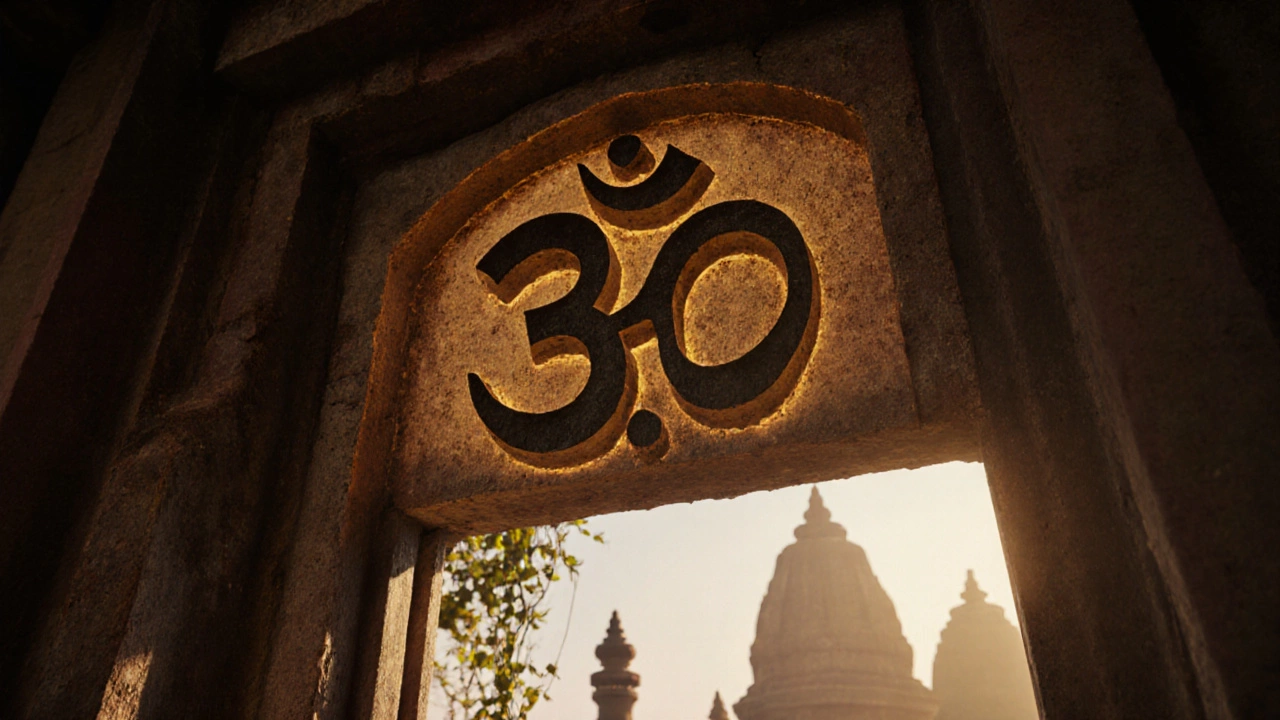
- Temple architecture: Carvings of Om adorn doorways, altars, and idol bases.
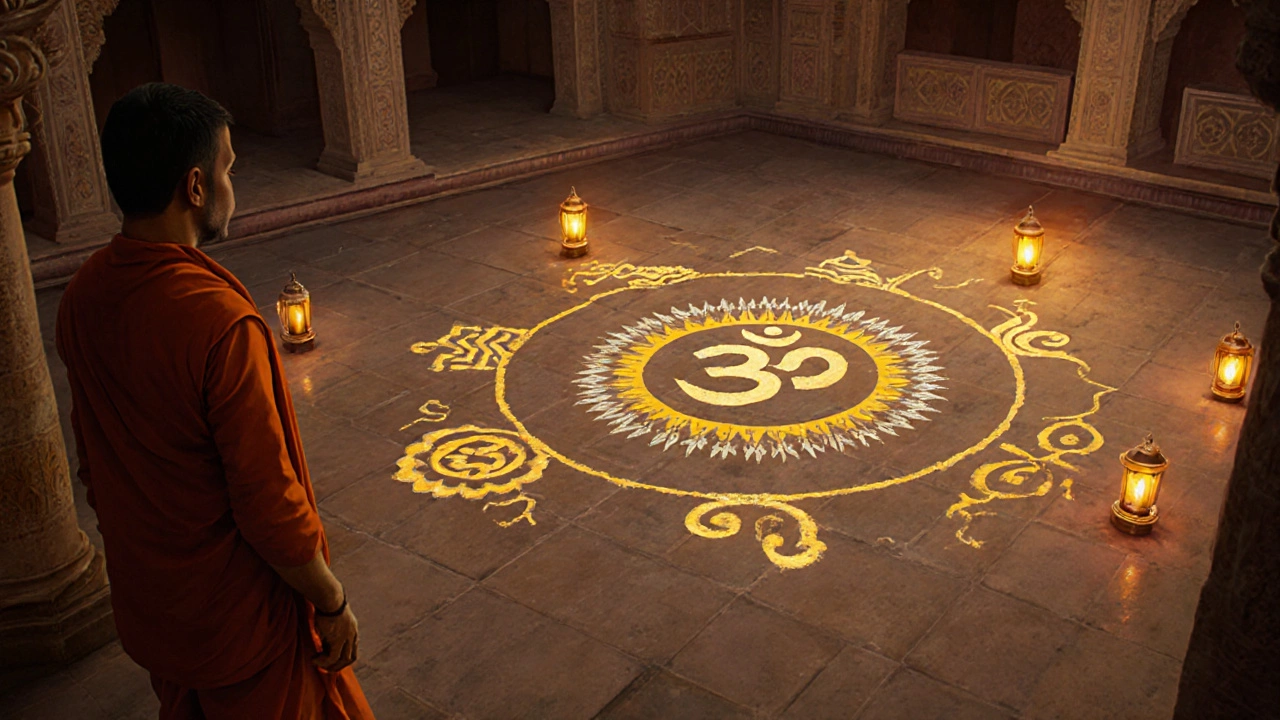
- Ritual markings: Devotees may draw Om on seasonal rangoli designs or on the foreheads of deities.
Because the sound resonates at a frequency that many believe promotes calm, Om has also entered secular wellness practices, though its spiritual origins remain essential for proper respect.
Other Sacred Symbols in Hinduism
While Om is the most universal, Hinduism embraces several other symbols, each with a distinct niche:
- Swastika - an ancient sign of prosperity and good fortune, predating its 20th‑century misuse.
- Shri Yantra - a geometric diagram representing the cosmos, used in tantric worship.
- Trishula - the three‑pronged spear of Shiva, symbolizing creation, preservation, and destruction.
Understanding these symbols helps avoid conflating their meanings, especially when Om is placed alongside them in modern designs.
Comparison: Om vs. Swastika
| Attribute | Om | Swastika |
|---|---|---|
| Origin period | Vedic era (≈1500BCE) | Indus Valley & Vedic era (≈2500BCE) |
| Core meaning | Primordial sound, unity of existence | Prosperity, well‑being, auspiciousness |
| Typical use | Mantra, meditation, temple art | Rangoli, festive decorations, wedding motifs |
| Visual form | Three curves, a dot, and a semicircle | Crossed arms forming a hooked clockwise or counter‑clockwise pattern |
| Modern perception | Globally recognized spiritual emblem | Often misidentified due to 20th‑century political misuse |
Common Misconceptions and Respectful Use
Because Om has entered fashion, tattoos, and décor, it’s easy to see it used superficially. Below are pitfalls to avoid:
- Treating Om as a mere logo strips it of its sacred vibration.
- Incorrect pronunciation - the sound should start with a deep “A”, glide into “U”, and finish with a humming “M”.
- Placing Om upside‑down - the orientation matters; the semicircle should sit atop the dot.
If you’re a non‑Hindu designing a logo, consider consulting a cultural expert and use the symbol only when the intent aligns with respect and mindfulness.
Practical Tips for Incorporating Om
- Learn the correct pronunciation from a qualified teacher or reliable audio source.
- When meditating, chant Om slowly, feeling the vibration in the chest and head.
- If you display the symbol publicly, place it in a clean, elevated spot, mirroring temple practice.
- Avoid mixing Om with unrelated commercial slogans; let its presence signal reverence.
- For graphic designers, use the Unicode character ॐ or a traditional Devanagari script, preserving the curves and dot.
Frequently Asked Questions
What does each part of the Om symbol represent?
The three curves stand for the waking, dreaming, and deep‑sleep states of consciousness. The dot (or the invisible fourth curve) symbolizes the transcendent state beyond these three, known as Turiya.
Is Om used in other Indian religions?
Yes. Buddhism, Jainism, and Sikhism also employ Om in chants and texts, though the theological interpretation may differ.
Can I get a tattoo of Om if I’m not Hindu?
It’s permissible if you approach it with genuine respect and understanding of its meaning. Many spiritual seekers adopt the symbol after studying its significance.
What is the difference between Om and the Swastika?
Om is a sound‑based emblem of universal consciousness, while the Swastika is a visual sign of prosperity and good fortune. Their origins overlap chronologically, but they serve distinct ritual purposes.
How often should I chant Om during meditation?
Practitioners often repeat Om 108 times using a mala (prayer beads). Beginners can start with three to five repetitions, gradually increasing as comfort grows.
Next Steps
If you’re curious to hear Om’s vibration, search for a reliable recording of the mantra or join a local yoga class that begins with an Om chant. For deeper study, read the Mandukya Upanishad and explore commentaries by Adi Shankaracharya.
Remember, the power of Om lies not just in its shape but in the awareness it invites. Treat it as a doorway to the larger rhythm of existence, and you’ll find it enriches both spiritual practice and everyday life.



Write a comment